


What Is Scent Marketing and Does It Actually Work?
A 2003 study in the International Journal of Marketing showed that scent marketing increased Nike customers’ intent to purchase by up to 84%.
Why? Because smell is the only human sense with a direct line to emotion and memory. Long before a customer reads a sign or checks a price tag, a subtle fragrance has already set the mood. But is it a genuine business tool, or just an overpriced air freshener?
Let’s break down the facts. We’ll test the hype against real research and share local scent marketing examples. Finally, we’ll give you a straight answer on whether it’s worth your money.
What Is Scent Marketing?
Scent marketing, also called ambient scenting, means using fragrance on purpose in a physical space. Businesses use it to shape how customers feel, how long they stay, and how they remember the brand afterwards. That’s the whole idea in a nutshell.
An air freshener is similar, but the two do very different jobs. An air freshener removes bad smells. Commercial scenting builds a feeling of calm, energy, luxury, or freshness. One fixes a problem. The other creates an experience.
Scent marketing has been around longer than you might think.
It all started in the early 1990s on a Las Vegas casino floor. Researcher Alan Hirsch piped fragrance into specific sections and noticed something huge. People spent more money where it smelled good.
After that, big brands jumped on board fast. Abercrombie & Fitch pumped signature cologne through its store vents. Singapore Airlines created a custom fragrance for its hot towels and cabin crew. Westin Hotels built its entire global brand identity around its iconic White Tea lobby scent.
By the 2000s, scenting wasn’t a gimmick. It was a proven business strategy for global giants.
But what about today? The real question for Australian business owners is simpler: Does this actually work for a normal local hotel, gym, or retail shop?
The Science Behind Why Scent Affects Behaviour
Smell works differently from your other senses. Sight and sound pass through a filter in your brain before you react. According to Harvard University research, smell goes straight to the limbic system, the part that handles emotion and memory.
That’s why scent marketing slips past the mental filters that make people tune out ads. You don’t “notice” a smell the way you notice a sign. Your brain feels it first.
In practice, that means if a customer has a good experience while a certain scent is in the air, their brain quietly links the two. Smell it again weeks later, and the memory comes rushing back.
That’s also why smell-based memories tend to stick around longer than something you saw once. It’s a big part of why commercial diffuser Australia venues lean on scent for brand recall, not just a nice atmosphere.
Does Scent Marketing Work?
The simple answer: Yes, scent marketing does work. But not for every business, and not evenly.
The Strong Evidence
Pleasant scent keeps people in a space longer. Research says the dwell time increases around 15% – 30%, and that tracks with basic psychology: people linger where they feel good.
Scent also beats sight when it comes to memory. A study by The Sense of Smell Institute found that people recall a scent with around 65% accuracy a full year later, while a visual memory from three months back sits closer to 50%.
Brand recall gets a real lift as well. As mentioned earlier with Nike’s example, consumers are roughly 84% more likely to remember a brand when it has a signature scent tied to it.
And the biggest evidence that this works? Look at who’s using this. Hotels, gyms, and retail chains worldwide keep paying for scent programs year after year. Businesses don’t keep funding something that doesn’t work.
Where the Claims Get Blown Up
Here’s where we slow down. You’ll see scent marketing ROI numbers like 300% or 400% thrown around, and they’re real, but they come with conditions attached. That kind of return shows up when scent is one piece of a well-built customer experience, not when a diffuser gets plugged in and forgotten.
Commercial scenting helps where people stick around, like hotels, spas, gyms, and premium retail. It doesn’t work in a quick-stop environment like a fast food counter or a petrol station. Nobody’s there long enough for it to take effect.
The Australian Context
Businesses that start scent marketing Austrailia early have a real advantage. They can own the space before it becomes standard practice.
Local research is a bit limited, but Australian retail psychology matches other Western markets. The global evidence holds up here as well.
Where Does Scent Marketing Work
Here are some places where commercial scenting could work:
Hotels & Hospitality
A great lobby scent sticks with guests long after checkout. Top hotels use a single signature fragrance across lobbies, linens, and room candles. For boutique hotels, scent marketing creates a unique vibe that photos and reviews can’t capture.
One of the best scent marketing examples in the industry? The Westin’s famous White Tea scent. It’s well known worldwide as part of the brand.
Gyms & Fitness Studios
Gyms need scent to beat bad odors and build a great atmosphere. Candles are a fire hazard, and water diffusers add unwanted humidity. Cold-air diffusion is the best fit here.
A gym that smells like sweat loses members, but a clean, fresh space feels premium, and members will pay extra for it. Citrus and mint scents work best in these spaces to boost energy.
Retail & Food
When Hershey opened its Times Square store, it added a chocolate scent to the store. The result? The sales jumped 34%. In restaurants and cafes, scent marketing can make food feel higher quality and keep diners at the table longer.
For luxury stores, commercial scenting is essential because a cheap-smelling store instantly ruins a premium price tag. Luxury brand Fendi took this further by creating a custom signature fragrance, called Ambre Romain, to give shoppers an unmistakable Fendi experience.
Offices & Professional Clinics
Offices use scent to make returning to work more inviting. Medical clinics use calming scents like lavender to lower patient anxiety and make wait times feel shorter. For corporate offices, a subtle reception scent builds trust before a client even sits down.
How to Get Started With Scent Marketing Australia
Ready to move past theory? Here’s how it actually works, step by step.
- Define your goal.
Are you managing odour, building brand atmosphere, creating a memory anchor for guests, or supporting staff wellbeing? Your goal shapes everything else, so get clear on it first.
- Assess your space.
Work out your coverage area first. See if you’ll integrate with existing HVAC or use standalone units, and how many separate zones your venue actually needs.
- Choose the right technology.
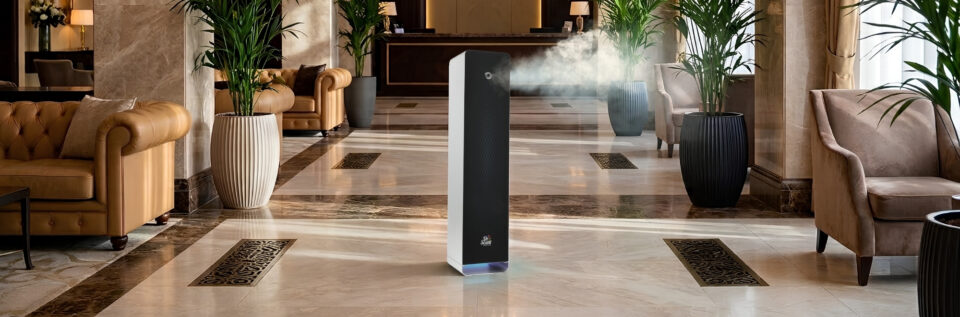
For commercial spaces, cold-air diffusion is the standard. It handles larger areas without adding humidity or diluting the scent. It matters what technology you use when you’re scenting a lobby or showroom rather than a bedroom.
- Select a scent profile.
This should reflect your brand personality and who walks through your door. A spa might lean into something soft and calming. A gym needs something fresh and energising. A luxury retailer wants something that feels considered, not generic.
- Decide on purchase vs rental.
If you’re new to scent marketing, renting is the lower-risk way in. There’s no upfront equipment cost, and you get to test what works before committing long-term. Explore Dr Scent’s rental options if you’d rather try it first.
Frequently Asked Questions
What is scent marketing?
Scent marketing is the deliberate use of fragrance in a physical space to shape how customers feel, how long they stay, and how they remember a brand. It’s used across hotels, retail, gyms, and offices to build a stronger, more memorable experience.
Does scent marketing actually work?
Yes, within limits. The evidence is solid for things like longer dwell time and stronger brand recall, especially in spaces where people stay longer. Places like hotels and premium retail, where lighting, music, and other factors help in creating a memory, too. It’s weaker in fast, transactional spaces like a servo or takeaway counter.
What industries benefit most from scent marketing?
Hotels, gyms, premium retail, spas, dental practices, and offices tend to see the strongest results. It’s mainly because these are spaces where people spend a lot of time.
Is scent marketing the same as air freshener?
No. An air freshener removes bad smells. Scent marketing is a deliberate strategy to build a specific feeling and brand association in a space.
How do I start scent marketing for my business in Australia?
The easiest first step is a chat with someone who does this daily. Book a free scent consultation with the Dr Scent AU commercial team, and they’ll build a plan around your space and budget.
Final Thoughts
So, does scent marketing actually work? Yes, when it’s done right. The evidence for longer dwell time, stronger brand recall, and higher sales intent holds up across different studies and industries. That’s especially in spaces where people spend real time, like hotels, gyms, and premium retail.
But it’s not automatic. The results depend on execution. The right technology, the right scent, and consistent use across your space all matter more than the hardware itself. Plug in a unit and forget about it, and you’ll get a forgettable result. Pair it with the right scent, lightening and maybe a bit of music, you’ll get the result you invested in.
Want to explore what scent marketing Australia could do for you? The best place to start is a conversation, not a purchase. Book a free consultation and find out what actually fits your space.